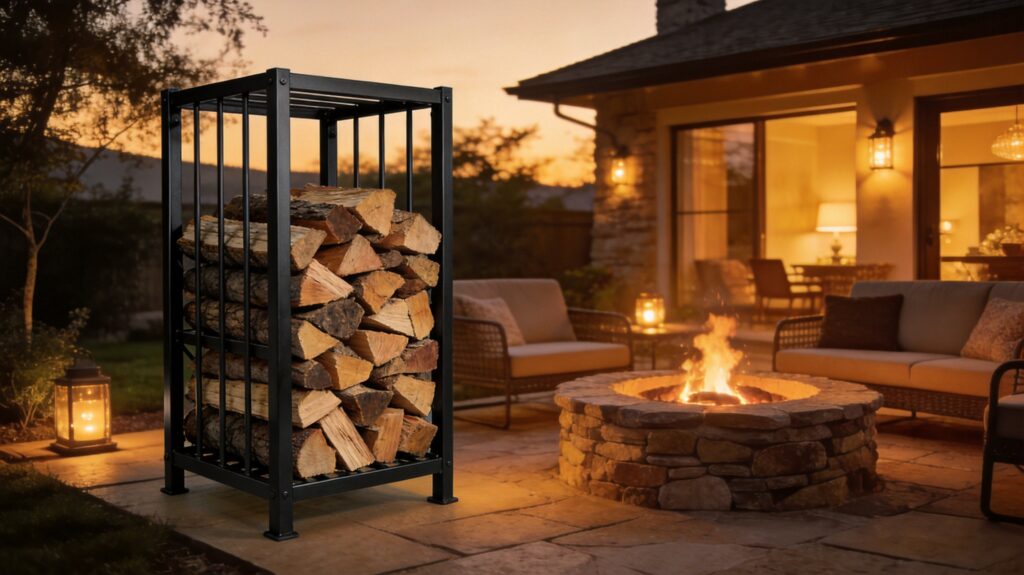
As someone with over 20 years in the metal fabrication and outdoor products industry, I’ve watched the firewood rack evolve from a purely utilitarian backyard accessory into a centerpiece of modern outdoor living design. In 2026, the convergence of rising wood-burning fireplace adoption, the “backyard as living room” movement, and surging demand for powder-coated steel durability is creating an unprecedented opportunity for B2B buyers and distributors. If you’re sourcing firewood racks for retail, hospitality, or wholesale channels, understanding these market shifts isn’t optional — it’s essential to staying competitive.
What you’ll learn in this guide: This article breaks down the five key 2026 outdoor living trends driving firewood rack demand, the market data behind each shift, what B2B buyers should prioritize in their procurement strategy, how powder coating technology is redefining product longevity, and which product configurations are seeing the fastest growth across North American and European markets.
Whether you’re a retailer planning your next seasonal order, a distributor evaluating new product lines, or a brand owner exploring OEM partnerships, these insights will help you make data-driven sourcing decisions that align with where the market is heading — not where it’s been.
Let’s dive into the trends reshaping the firewood rack industry this year.
Table of Contents
- Why Is the “Outdoor Living Room” Trend Boosting Firewood Rack Sales?
- How Are Modular and Customizable Designs Changing B2B Procurement?
- What Role Does Powder Coating Technology Play in 2026 Product Standards?
- Which Geographic Markets Are Driving the Highest Firewood Rack Growth?
- How Should B2B Buyers Adjust Their Sourcing Strategy for 2026–2027?
Why Is the “Outdoor Living Room” Trend Boosting Firewood Rack Sales?
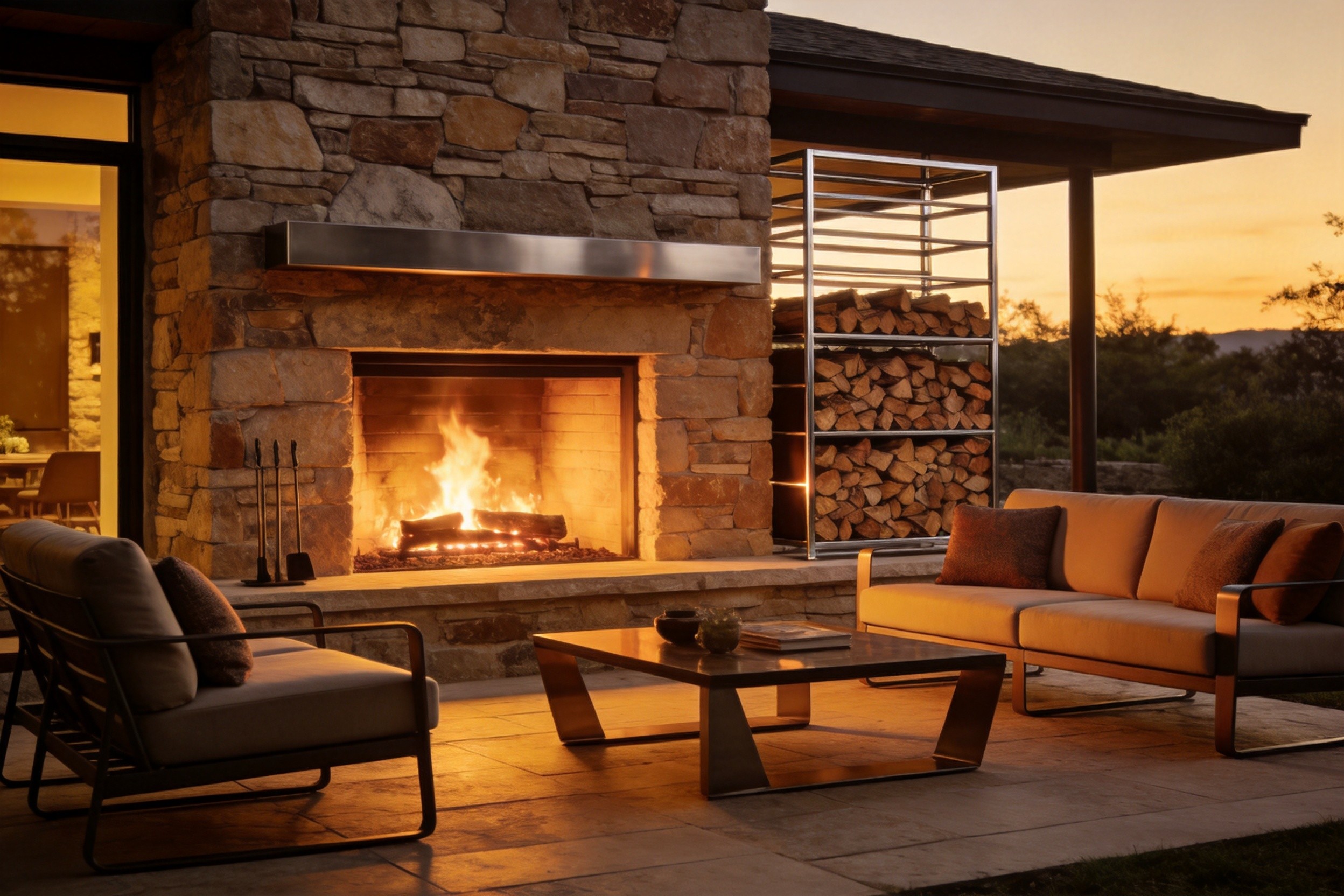
The “outdoor living room” concept has become the defining home improvement movement of 2026, and firewood racks are emerging as an essential component of this design philosophy. Homeowners are no longer treating patios and decks as seasonal afterthoughts — they’re building fully furnished outdoor extensions of their indoor living spaces, complete with fire features, weather-resistant furniture, and yes, beautifully designed firewood storage.
According to the 2026 U.S. Houzz Outdoor Trends Study, 83% of renovating homeowners now include lounge or seating areas in their outdoor projects, and nearly half (48%) incorporate a fireplace or fire pit into their backyard design[1]. This represents a significant cultural shift: the share of homeowners motivated by personal enjoyment rather than resale value has risen to 25%, up from 22% in 2024[2].
The implications for firewood rack demand are substantial. When a homeowner invests $15,000–$50,000 in creating a fully realized outdoor living space, they need accessories that match the aesthetic and functional standards of that investment. A rusted, flimsy firewood rack simply doesn’t belong next to a designer fire pit and a premium outdoor sofa. This is driving a measurable shift toward powder-coated steel racks, minimalist industrial designs, and integrated storage systems that complement — rather than detract from — the overall outdoor aesthetic.
For B2B buyers, this trend translates directly into higher average order values and stronger demand for premium-tier products. Retailers who stock designer-grade firewood racks alongside fire pits and outdoor furniture are seeing attach rates of 30–40% — meaning nearly 4 in 10 customers who purchase a fire feature also purchase a matching firewood storage solution. The data from the global wood-burning fireplace accessories market reinforces this: the segment is projected to grow at a CAGR of 6.8% from 2024 to 2030[3], with firewood racks representing one of the fastest-growing subcategories.
Key takeaway: The outdoor living room trend isn’t just increasing the volume of firewood rack purchases — it’s elevating the quality tier. B2B buyers should prioritize aesthetically refined, powder-coated steel designs that integrate seamlessly with modern outdoor furniture and fire features.
How Are Modular and Customizable Designs Changing B2B Procurement?
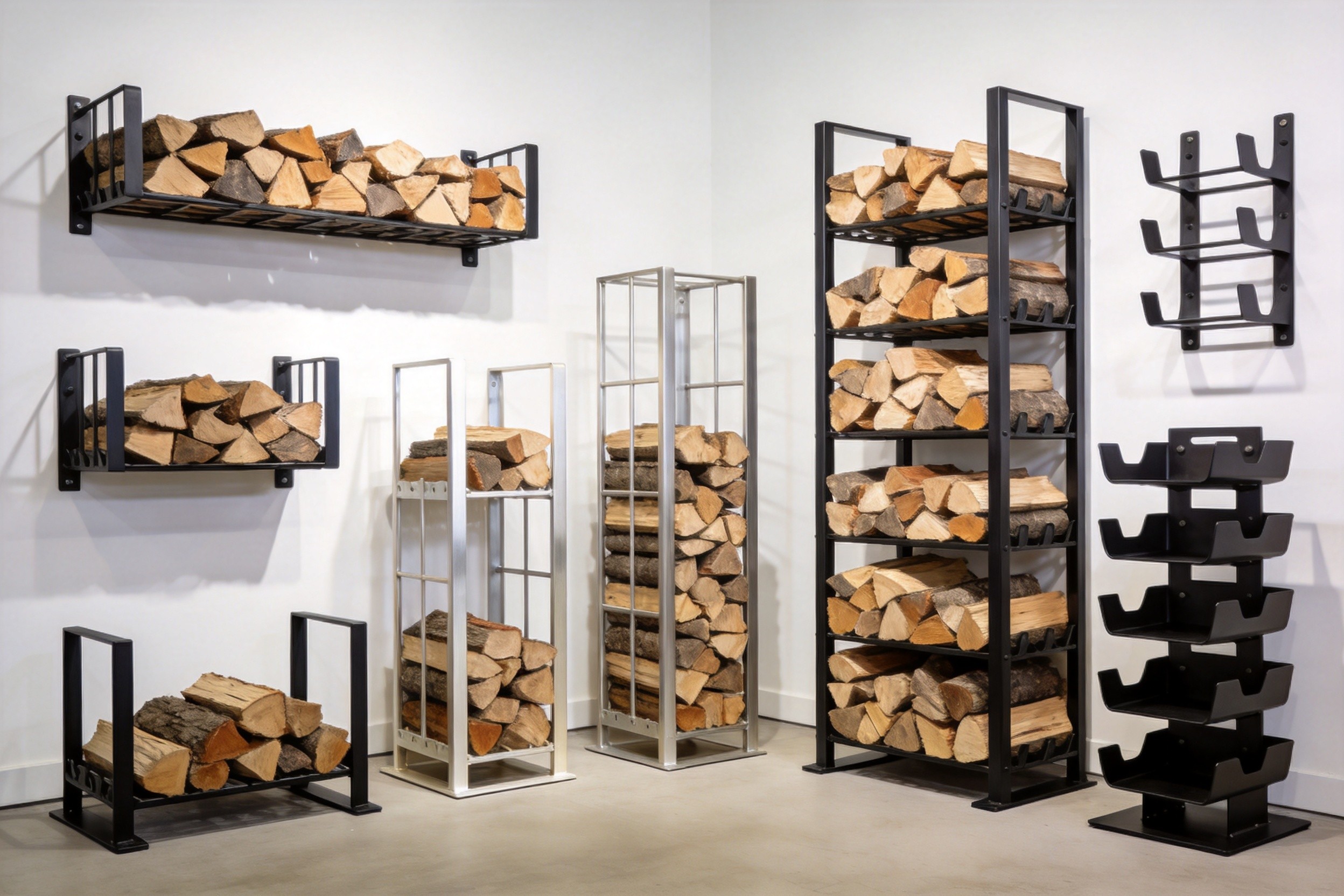
Modularity has become the buzzword in firewood rack procurement, and for good reason: the one-size-fits-all approach is being replaced by configurable storage systems that adapt to diverse retail environments, climate zones, and consumer preferences. In 2026, B2B buyers are increasingly seeking manufacturers who can offer flexible SKU strategies — not just fixed dimensions — through modular bracket systems, stackable configurations, and expandable designs.
The shift toward modularity addresses several pain points simultaneously. First, it reduces inventory complexity for retailers: instead of stocking five different rack sizes, a single modular bracket kit can be paired with customer-supplied lumber in any dimension, effectively creating unlimited size variants from one SKU. Second, it enables distributors to serve both residential and commercial clients with the same core product line — a hospitality client might need a 12-foot rack system for a lodge, while a residential customer wants a compact 4-foot unit for their patio, and both can be served from the same bracket inventory.
From a manufacturing perspective, modular designs also offer significant advantages in shipping efficiency. Flat-pack bracket systems reduce container utilization costs by 35–45% compared to pre-assembled racks, a factor that directly impacts landed costs for international buyers. For OEM partnerships, modular bracket platforms allow brand partners to create differentiated product lines under their own branding while leveraging the same engineering and tooling investment.
| Design Type | MOQ Flexibility | Shipping Efficiency | Customization Level | Best For |
|---|---|---|---|---|
| Fixed-Size Rack | Low | Moderate | Limited | Entry-level retail |
| Modular Bracket Kit | High | High (flat-pack) | Very High | Multi-SKU retailers |
| Stackable Tier System | Moderate | Moderate | High | Seasonal inventory |
| Wall-Mounted Bracket | Low | Very High | Moderate | Urban/small-space retail |
The trend also reflects a broader shift in consumer behavior. According to industry data, flexible configurations and stackable options are gaining significant traction in urban housing markets, where space constraints and design preferences vary widely[4]. Nearly three-quarters of homeowners now choose low-maintenance, adaptable outdoor solutions, and this mindset extends to firewood storage as much as it does to landscaping choices.
Key takeaway: B2B buyers who partner with manufacturers offering modular platform designs gain a strategic advantage — lower shipping costs, broader SKU coverage, and the ability to serve diverse market segments from a single product line.
What Role Does Powder Coating Technology Play in 2026 Product Standards?
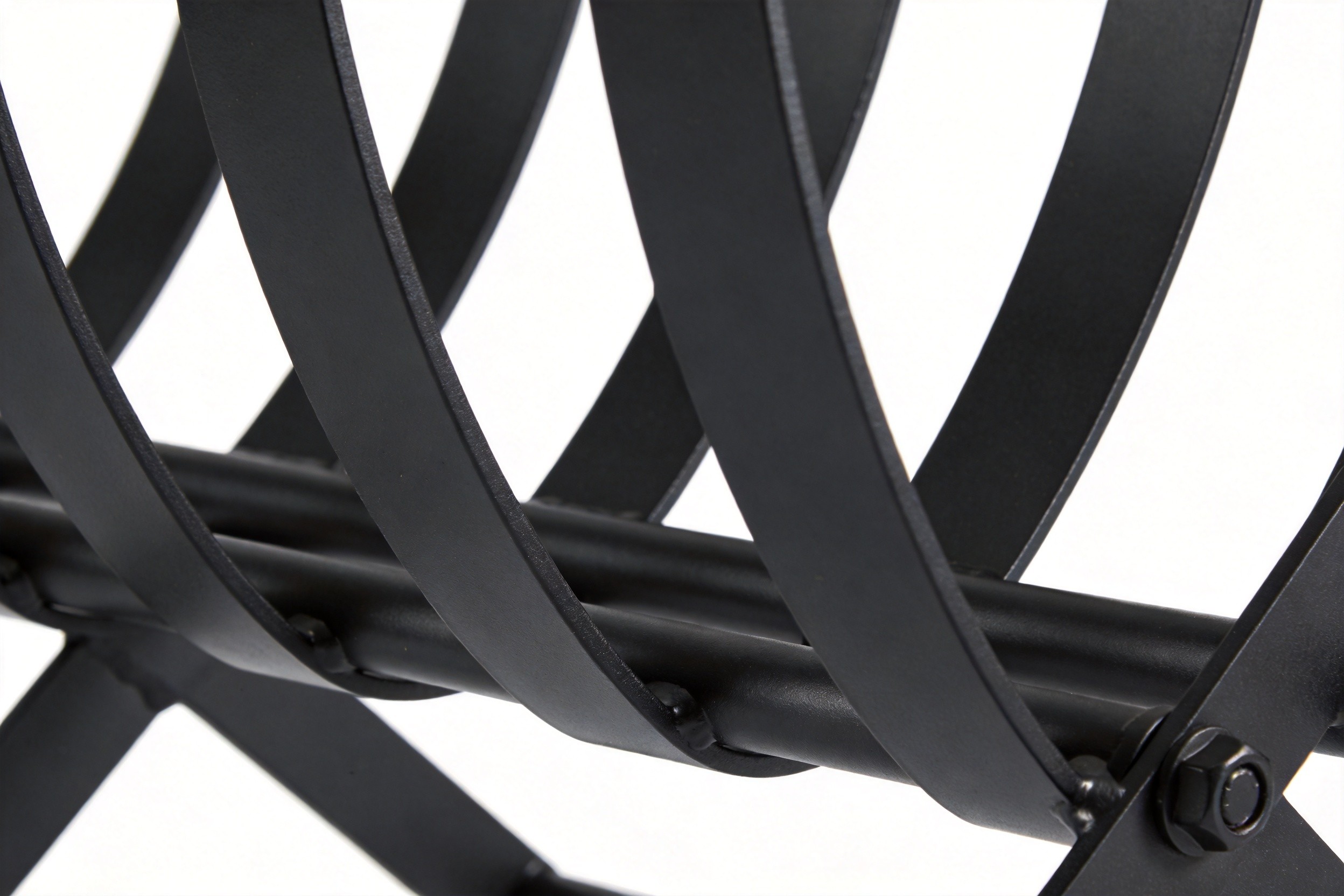
Powder coating has always been a critical differentiator in the firewood rack market, but in 2026, advances in coating technology have elevated it from a “nice-to-have” feature to an absolute baseline expectation — for both B2B buyers and end consumers. The days when a basic paint finish could pass for “weather-resistant” are over; today’s market demands electrostatic powder coatings that survive 1,000+ hours of salt spray testing without visible corrosion.
The technical advancements in powder coating over the past two years have been significant. Modern electrostatic application methods achieve uniform coverage even on complex tubular geometries, while high-heat curing processes create a finish that resists UV degradation, mechanical chipping, and thermal cycling far better than traditional wet paint. Industry data shows that advanced powder coating can extend product lifespan by up to 50% compared to untreated or conventionally painted steel[5] — a claim that matters enormously when a B2B buyer is evaluating warranty terms and return rates.
For B2B procurement, powder coating quality directly impacts three critical metrics:
1. Return rates: Rust-related complaints account for the single largest category of firewood rack returns in online retail channels. Buyers who prioritize certified powder coating (with verifiable salt spray test data) consistently report return rates below 2%, compared to 8–12% for painted alternatives.
2. Warranty confidence: Manufacturers offering 3–5 year structural warranties almost universally back them with powder-coated finishes. This reduces claim exposure for distributors and builds end-consumer trust in the brand.
3. Brand differentiation: In a market where Amazon and big-box retail channels are saturated with low-cost, poorly finished products, B2B buyers who stock certified powder-coated racks can command 20–35% higher retail price points while maintaining strong customer satisfaction scores.
When evaluating suppliers, B2B buyers should request documented proof of: RAL color matching capability for custom branding, salt spray testing reports (minimum 72 hours, ideally 1,000+ hours for premium lines), and compliance with ASTM A123 standards for galvanization and corrosion resistance. ISO 9001:2015 certified manufacturers should provide full material traceability documentation as standard practice.
Key takeaway: Powder coating in 2026 is not a premium upgrade — it’s the baseline. B2B buyers should treat 1,000-hour salt spray certification as a minimum procurement requirement and use coating quality as a primary differentiator when evaluating OEM partners.
Which Geographic Markets Are Driving the Highest Firewood Rack Growth?
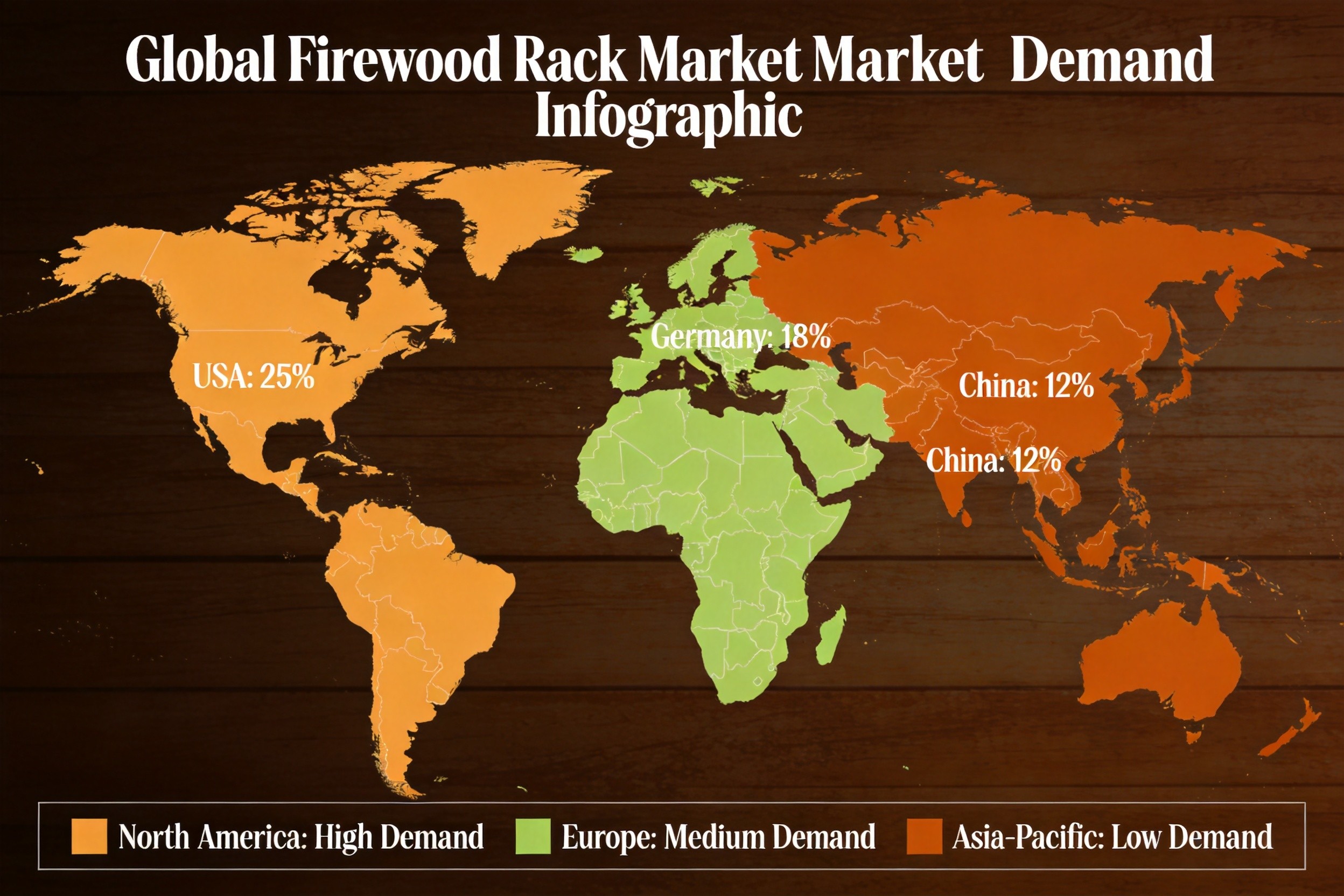
While firewood racks are a global product category, the geographic distribution of demand in 2026 tells a clear story: North America remains the dominant market, Europe holds strong premium positioning, and the Asia-Pacific region is emerging as the fastest-growing import corridor. Understanding these regional dynamics is essential for B2B buyers planning their sourcing volumes, product specifications, and go-to-market strategies.
North America continues to lead global demand, accounting for approximately 40% of the market share. The drivers here are multifaceted: a strong culture of wood-burning for both heating and ambiance, the continued expansion of suburban and rural residential construction, and the 2026 outdoor living trends discussed earlier. The United States alone represents the single largest import market for metal firewood racks, with demand particularly strong in the Northeast, Upper Midwest, and Mountain states where wood-burning is both practical and culturally embedded.
Europe commands roughly 25% of the global market, but its significance lies in premium positioning rather than pure volume. European buyers — particularly in Germany, Scandinavia, and the UK — demonstrate a strong preference for handcrafted aesthetics, certified eco-friendly materials, and rigorous quality standards. Products carrying CE marking, meeting EN standards for material safety, and featuring sustainable powder coating processes have a measurable competitive advantage in this market. The European preference for design-forward, architecturally integrated firewood storage creates opportunities for manufacturers who can deliver both aesthetic refinement and technical compliance.
Asia-Pacific is the fastest-growing region, with a CAGR of 7.2% led by China’s and India’s expanding mid-tier housing sector[6]. While this region has traditionally been a manufacturing hub rather than an end-consumer market, rising domestic demand for outdoor living products — particularly in Australia, South Korea, and Japan — is creating new export opportunities for manufacturers who can serve both OEM and direct-to-market channels.
| Region | Market Share | Growth Trend | Key Demand Drivers |
|---|---|---|---|
| North America | ~40% | Steady | Wood-burning culture, outdoor living boom |
| Europe | ~25% | Stable premium | Design standards, eco-certification preference |
| Asia-Pacific | ~20% | Fastest (7.2% CAGR) | Urbanization, rising middle-class outdoor spending |
| Rest of World | ~15% | Emerging | Tourism/hospitality sector, new residential development |
For B2B buyers, the strategic implication is clear: diversifying supply partnerships across geographic markets reduces risk and opens new revenue channels. Manufacturers based in China’s Zhejiang and Jiangsu provinces — particularly those near Shanghai and Ningbo port hubs — offer a combination of production scale, quality certification, and logistics efficiency that serves all three major demand regions effectively.
Key takeaway: B2B buyers should align their product specifications with regional preferences — heavy-duty modular racks for North America, design-certified premium lines for Europe, and compact modular systems for Asia-Pacific — while leveraging manufacturing partners with proven multi-region logistics capabilities.
How Should B2B Buyers Adjust Their Sourcing Strategy for 2026–2027?
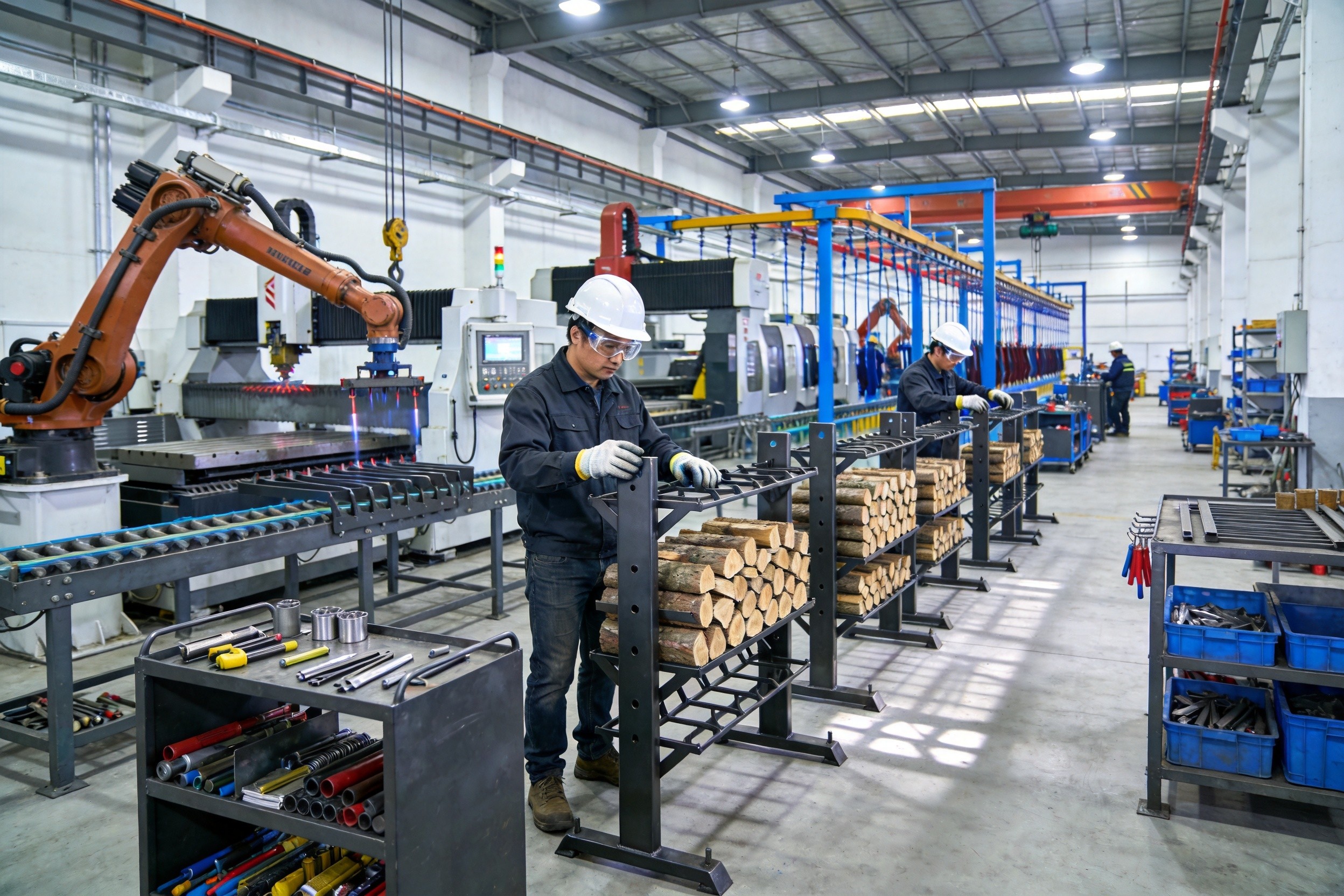
The convergence of outdoor living trends, modular design demand, powder coating expectations, and geographic market shifts creates a clear imperative: B2B buyers who want to capitalize on the firewood rack market’s growth trajectory need to update their sourcing strategies now, not after the 2026 holiday selling season has passed.
1. Prioritize OEM partnerships with full DFM (Design for Manufacturing) capability. The most successful B2B buyers in 2026 aren’t just ordering from catalogs — they’re collaborating with manufacturers to optimize product designs for their specific markets. A manufacturing partner that offers in-house CAD/CAM engineering, rapid prototyping (7–15 days), and DFM review can help you reduce material costs by 15–20% without sacrificing structural integrity. This collaborative approach is particularly valuable when developing modular bracket systems or custom color-matched powder coating lines.
2. Invest in coating certification and quality documentation. As powder coating becomes the baseline expectation, B2B buyers should require their suppliers to provide verifiable test reports with every shipment. Material Test Reports (MTRs), dimensional analysis, and OQC (Outgoing Quality Control) files should be standard deliverables — not upsells. Manufacturers operating under ISO 9001:2015 frameworks should provide full component traceability, including steel grade certification and coating batch records.
3. Optimize for flat-pack and modular shipping configurations. With container freight costs remaining volatile, the shift toward flat-pack modular designs isn’t just a consumer preference — it’s a procurement cost strategy. Bracket-based systems that ship flat and assemble on-site can reduce per-unit landed costs by 30–40% compared to pre-assembled equivalents, a savings that directly improves margin at the retail level.
4. Diversify across product tiers. The 2026 market rewards breadth: entry-level buyers want affordable, functional designs ($13–$20 FOB range), mid-tier customers seek powder-coated durability with aesthetic appeal ($20–$45 FOB), and premium buyers expect designer-grade finishes with custom branding options ($45–$80+ FOB). A well-structured sourcing strategy should cover at least two of these three tiers to capture maximum market share.
5. Build relationships with manufacturers who understand international compliance. Whether it’s ASTM standards for the US market, CE marking for Europe, or SAA compliance for Australia, regulatory requirements vary significantly by destination. Manufacturers with proven export track records across 30+ countries understand these nuances and can navigate certification requirements without delaying shipment timelines.
Key takeaway: The winning B2B sourcing strategy for 2026–2027 combines OEM collaboration, coating certification, flat-pack logistics optimization, tier diversification, and compliance expertise. Buyers who implement these five pillars now will be positioned to capture market share as outdoor living demand continues its upward trajectory.
Conclusion
The firewood rack market in 2026 is not the same market it was even two years ago. The outdoor living room movement has transformed firewood racks from utilitarian accessories into design-critical components of premium outdoor spaces. Modular designs are reshaping procurement economics. Powder coating technology has set new durability baselines. And geographic demand patterns are creating opportunities for strategic B2B buyers who can align their sourcing with regional preferences.
The companies that thrive in this evolving landscape will be those that invest in quality certification, embrace modular design flexibility, and build genuine OEM partnerships — not transactional vendor relationships.
Ready to Source Quality Firewood Racks for Your Market?
Contact us for custom quotes, DFM analysis, and OEM/ODM consultation. Let’s build your next product line together.
WhatsApp/WeChat/Mobile: +86 18957372973
Email: info@jxchuanfoo.com
Website: https://jxchuanfoo.com
References & Footnotes
- [1] 2026 U.S. Houzz Outdoor Trends Study ↩︎ | Source: Houzz Pro Research
- [2] Houzz 2026 Outdoor Renovation Motivation Data ↩︎ | Personal enjoyment vs. resale trend
- [3] Global Wood-Burning Fireplace Accessories Market Report ↩︎ | Grand View Research data
- [4] Indoor Firewood Storage Market Trends & Analysis ↩︎ | B2B procurement insights
- [5] Powder Coating Technology Impact on Product Lifespan ↩︎ | Durability improvement data
- [6] Indoor Firewood Storage Regional Market Distribution ↩︎ | Asia-Pacific CAGR data


