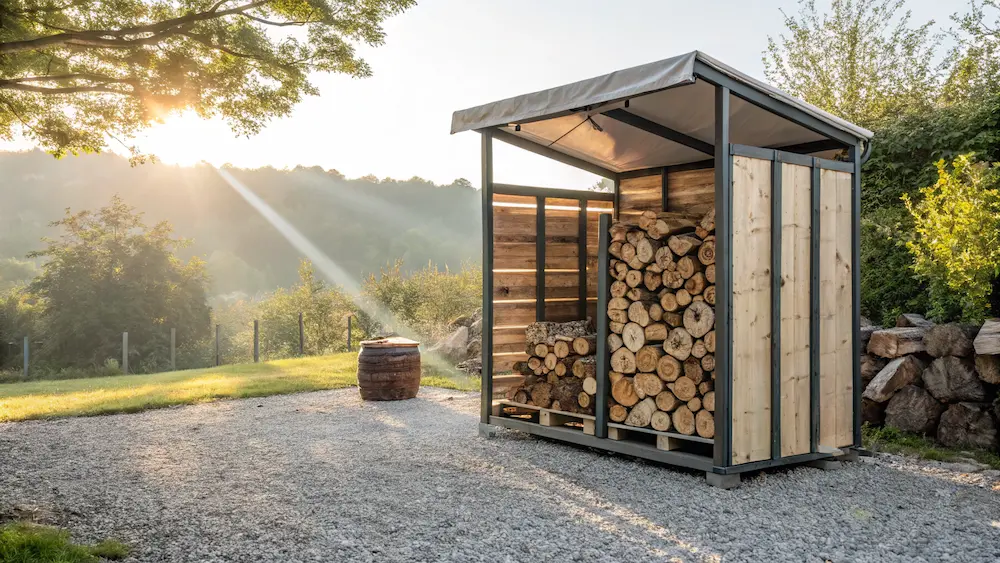
What Firewood Rack Insights Can Transform My Burns, Budget, and Backyard?
November 18, 2025 by admin
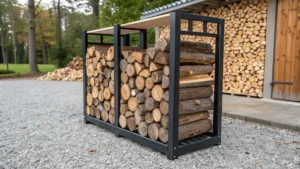
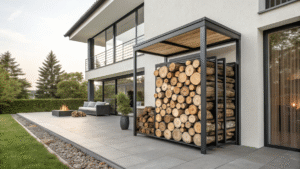
I’ve learned the hard way that the difference between a smoky, frustrating fire and a clean, efficient burn often comes down to one unsung hero: the firewood rack. By optimizing airflow, elevation, and placement, I’ve cut creosote, sped up seasoning, and reduced mess and pests—all while saving money. In this insight-rich guide, I’ll share the strategies I use to pick and position racks, size them to my burn rate, and maintain them for long-term performance.
Summary: I design my firewood rack setup around airflow, top-only covers, elevation off the ground, and right-sized capacity, keeping moisture in the 15–20% sweet spot for hotter, cleaner fires and lower maintenance costs.
Before we dive in, here’s my bridge: if your logs are wet, bug‑ridden, or inconsistently seasoned, it’s not just the wood—it’s how you store it. A smarter rack turns your yard into a mini kiln and your fireplace into a dependable heat source.
Table of Contents
- Why Is a Firewood Rack the Fastest Way to Improve My Burns?
- How Do I Size a Firewood Rack for My Space and Burn Rate?
- Which Materials and Designs Actually Last Outdoors?
- Where Should I Place a Firewood Rack for Faster Seasoning?
- What Maintenance and Accessories Keep Wood Burn‑Ready?
Why Is a Firewood Rack the Fastest Way to Improve My Burns?
I used to stack logs directly on soil and wonder why my chimney needed constant cleaning. Elevation and airflow solved most of my problems in a week.
This section explains how racks control moisture, reduce creosote, and keep stacks safer and cleaner than ground piles.
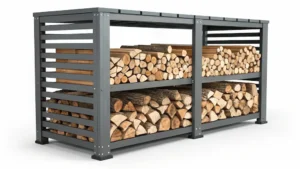
– Elevation prevents moisture wicking: Keeping splits 4–6 inches off the ground stops rot and mold, accelerating drying from all sides.
– Airflow equals cleaner combustion: Open sides and gaps promote cross‑ventilation, hitting the 15–20% moisture target that reduces smoke and maximizes BTUs.
– Pest and mess control: Distance from soil discourages ants and termites; tidy stacks cut bark chips and keep entryways cleaner.
– Safety and stability: End braces prevent collapses; consistent stacking reduces trip hazards and strains.
– Indoor comfort: A small staging rack near the hearth keeps debris contained and reduces back‑and‑forth trips.
Claim: Racks that elevate and ventilate wood can shave weeks off seasoning time and cut creosote buildup—saving on chimney sweeps and improving indoor air quality.
For moisture targets and seasoning fundamentals, I reference extension guidance[^1].
A well‑built rack turns storage into an active seasoning system, delivering hotter burns and fewer headaches.
How Do I Size a Firewood Rack for My Space and Burn Rate?
I stopped running out mid‑winter when I matched rack volume to my true consumption and split inventory by season.
This section breaks down cords, face cords, and practical rack capacities so you don’t overbuy—or understore.
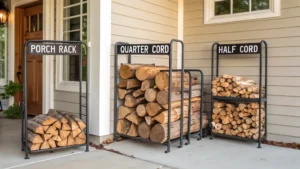
Sizing essentials:
– Know your units:
– Full cord: 4 ft × 4 ft × 8 ft = 128 cubic feet.
– Face cord: One 4 ft × 8 ft row of 16‑inch logs (≈ 1/3 cord).
– Typical rack capacities:
– Indoor/porch racks (2–4 ft): A few days of fuel plus kindling.
– Quarter‑cord racks (4–6 ft): Light use or supplemental storage.
– Half/full‑cord systems (8–12+ ft): Primary winter supply.
– Double‑row strategy: Two rows under one cover boost density without expanding footprint; keep side airflow open.
– Season planning: If you’re seasoning next year’s wood while burning this year’s, aim for 1.5–2× your single‑season capacity to avoid shortages.
– Measure your burn rate: Track weekly use in peak season for three weeks, then multiply by season length; add 15% buffer for cold snaps.
For clear cord definitions and planning context, I use this energy resource[^2].
Right‑sizing your rack prevents emergency wood runs and ensures a steady supply of seasoned logs throughout winter.
Which Materials and Designs Actually Last Outdoors?
I’ve had racks sag, rust, and wobble. Moving to heavier‑gauge steel with good bracing—and using a breathable cover—finally gave me a set‑it‑and‑forget‑it setup.
This section compares steel, aluminum, and wood racks, and highlights build details that matter for durability.
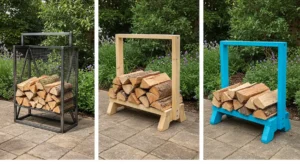
What’s worked for me:
– Powder‑coated steel: Best balance of strength and cost. Look for thicker tubing, welded or gusseted joints, and UV‑stable powder coats. Touch up chips to prevent rust creep.
– Aluminum: Rustproof, lighter to move, great in coastal humidity; ensure robust cross‑bracing to minimize flex.
– Treated wood: Natural aesthetic; needs more maintenance and high‑quality galvanized or stainless fasteners to avoid staining and corrosion.
– Design details that pay off:
– Elevated base: Bottom slats 4–6 inches off ground for drainage.
– Cross‑bracing: Controls sway and preserves straight, safe stacks.
– End supports: Angled or curved ends reduce spillover.
– Modular extensions: Scale capacity without buying a new rack.
– Tool‑free or simple assembly: Faster seasonal setup and takedown.
Quick comparison
| Feature | Steel (Powder‑Coated) | Aluminum | Treated Wood |
|—|—|—|—|
| Durability | High | Medium–High | Medium |
| Rust Resistance | High with care | Excellent | Depends on finish |
| Weight | Heavy | Light | Heavy |
| Upkeep | Low–Medium | Low | Medium–High |
| Cost | Moderate | Higher | Lower–Moderate |
For storage fundamentals (airflow, elevation, dry covers), extension guidelines remain consistent across climates[^3].
A rack built for weather—with real bracing and a quality finish—will save you money over time and keep your fuel truly burn‑ready.
Where Should I Place a Firewood Rack for Faster Seasoning?
Placement is half the battle. Sun and wind are free resources—use them.
This section covers micro‑site selection, ground prep, and cover tactics that speed drying while cutting pest pressure.
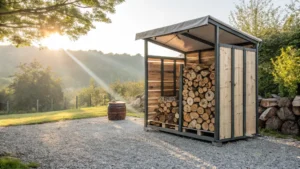
My placement playbook:
– Sun + breeze: Prioritize a sunny, ventilated spot over shaded corners.
– Ground prep: Gravel pads or pavers improve drainage, reduce mud, and deter insects.
– Clearance: Keep 3–5 feet from walls or fences; leave space behind and below for airflow.
– Top‑only cover: Shed rain while keeping sides open; full tarps trap moisture and slow seasoning.
– Safety buffer: Follow local codes and avoid large stacks in garages or against wooden siding.
For fire safety and distance considerations near structures, I lean on NFPA resources[^4].
Put your rack where weather helps—let nature do the drying while you do less work.
What Maintenance and Accessories Keep Wood Burn‑Ready?
Small upgrades made my fires cleaner and my routine easier—especially during wet stretches.
This section highlights tools and care habits that protect your investment and improve everyday use.
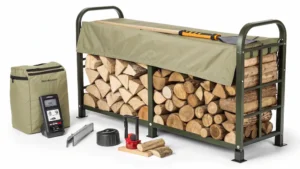
My go‑to kit:
– Breathable cover: UV‑resistant, top‑only or vented covers keep rain off while maintaining airflow.
– Moisture meter: Aim for 15–20% before burning; it’s the cheapest performance upgrade you can buy.
– Log carriers: Heavy‑duty canvas or leather totes keep debris out of the house.
– Kindling splitter: Safe, consistent kindling without swinging tools indoors.
– Indoor staging rack: A small rack by the hearth reduces mess and trips.
Care rhythms:
– Rotate by season: Burn oldest wood first; label stacks “Fall,” “Winter,” “Next Year.”
– Hardware check: Tighten bolts, inspect coatings for chips, and touch up annually.
– Pest management: Keep vegetation trimmed and avoid direct contact with siding.
– Clean zone: A mat under indoor racks catches chips and dust.
For efficient burning and emissions guidance, I keep the EPA Burn Wise playbook handy[^5].
Maintenance doesn’t need to be a chore—one afternoon of checks can set you up for a whole season of clean, easy fires.
Conclusion
Firewood racks are more than storage—they’re simple, powerful tools for moisture control, safety, and convenience. When I elevate my stacks, choose durable materials, place the rack in sun and wind, and use a breathable top cover, my fires start faster, burn hotter, and produce less creosote. Add a moisture meter and a small indoor staging rack, and you’ll feel the difference on your very next burn.
Please feel free to contact us if you are interested in our metal firewood rack.
Footnote
[^1]: Oregon State University Extension — Firewood Seasoning Basics — Used for moisture targets and seasoning fundamentals. ↩
[^2]: U.S. EIA — Firewood and Wood Pellets — Referenced for cord and face cord definitions to aid rack sizing. ↩
[^3]: University of Minnesota Extension — Firewood Storage and Use — Cited for airflow, elevation, and dry storage practices. ↩
[^4]: NFPA — Home Fire Safety — Used for safe placement and distance guidance near structures. ↩
[^5]: EPA Burn Wise — Efficient Wood Burning — Referenced for efficient burning and emissions best practices tied to seasoned wood. ↩
Written by

admin
You may also be interested in:
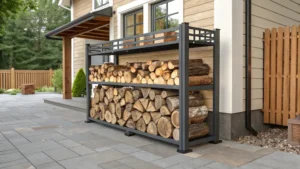
Why Should I Upgrade to a Firewood Rack Now for Cleaner Burns and Lower Costs?
I’ve hauled, split, and burned more cords than I can count, and one insight keeps proving itself every season: a well-designed firewood rack is the cheapest way to get cleaner
How Can an Indoor/Outdoor Pickleball Net Frame Deliver Long-Term Durability and Better Training Outcomes
As a recreational league organizer and product strategist, I’ve watched one piece of gear quietly determine whether a clinic runs smoothly: the pickleball net frame. A durable indoor/outdoor pickleball net
What Metal Firewood Rack Trends Should You Watch in 2025?
I’ve spent the last few years comparing metal firewood racks across materials, coatings, designs, and price points—from boutique artisan fabricators to big-box bestsellers—and I’ve seen a quiet transformation in this
Which Hunting Stand Is Best for Outdoor Activities
Choosing the right hunting stand determines comfort, concealment, and safety throughout the season
Why Build a 4x4 Platform With a 10-Foot Height Hunting Stand
I’ve built a few compact hunting stands over the years, and the 4×4 platform at 10 feet tall remains my sweet spot for mobility, concealment, and cost. Whether you’re setting

How to Choose the Best Hunting Stand Tower for Your Next Adventure
Choosing the right hunting stand tower ensures safety, comfort, and optimal visibility. Factors like weight capacity, material, setup ease, and camouflage effectiveness are key to making the best choice. This guide will help you understand the types of stands and expert tips to select the perfect one for your needs.
Adapting Basketball Storage Racks for Different Spaces?
Basketball storage racks can be customized for both small home spaces and large sports complexes, optimizing space and functionality. Strategic placement, modular designs, and mobile units enhance organization and accessibility, ensuring efficient storage solutions tailored to specific environments.
Evaluating the Cost and Value of Basketball Storage Racks?
Basketball storage racks vary in price, reflecting differences in material quality, capacity, and design. Understanding the cost and value can guide informed purchasing decisions. This guide explores key factors, technical specifications, and how to evaluate the best value for basketball storage racks.
Daily Maintenance and Cleaning of Basketball Storage Racks?
Basketball storage racks are essential for keeping equipment organized and accessible. However, regular maintenance and cleaning are crucial to preserve their functionality and appearance. In this guide, we explore how to maintain basketball storage racks, common issues encountered, and effective solutions.
How to Choose Which Stand to Hunt
Selecting the right hunting stand is crucial for success, influenced by environmental factors, game patterns, seasonal changes, personal preferences, and technology. Assessing terrain, animal behavior, and climatic conditions helps optimize stand placement. Utilizing tools like GPS and trail cameras can further enhance strategic decisions, ensuring a rewarding hunting experience.